


 The origins of Justin Trudeau's decline and fall
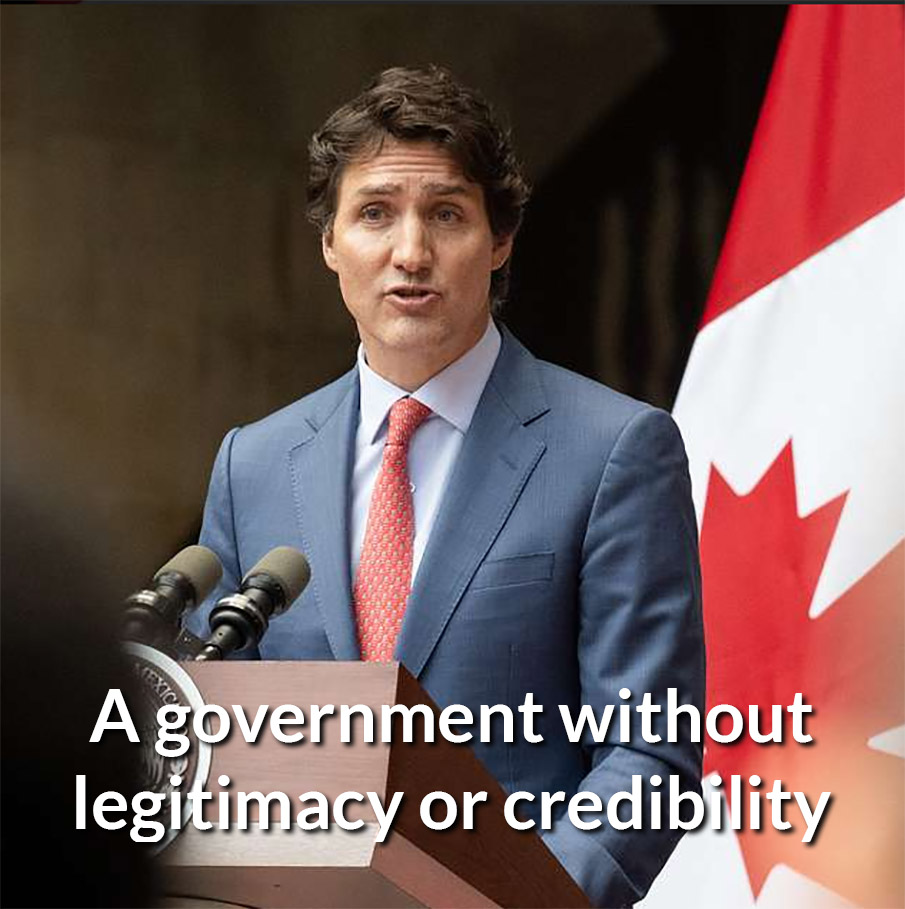
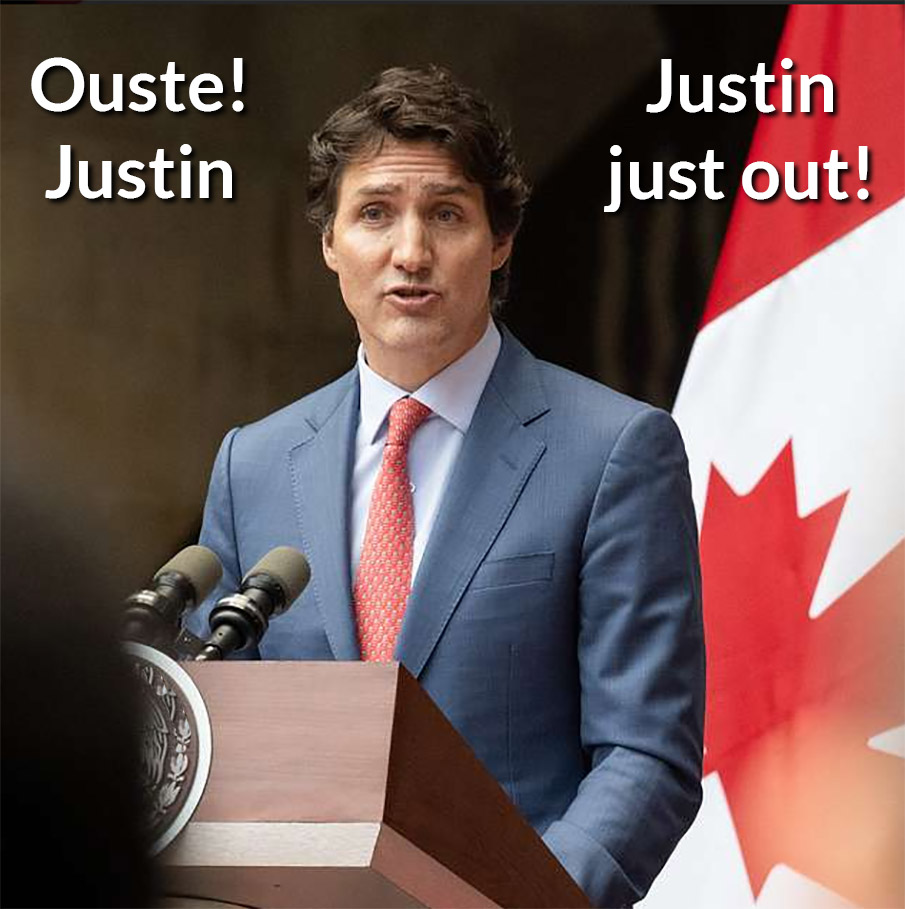
Justin Trudeau announced today that he will resign as soon as the Liberal Party elects a new leader.
We must go back to Justin Trudeau's first mandate to find the roots of the decline and fall of this Prime Minister, first seen as a revelation when elected in 2015, then pushed out the door by almost his entire caucus.
Trudeau was the embodiment of change in 2015, and had skilfully taken advantage of Conservative leader Stephen Harper's waning popularity and the fact that he was starting his election campaign as an underdog.
But it was all a mirage wrapped in an ideology that gradually alienated him from the electorate. Few of his commitments became reality, and his lack of interest in sound financial management of the country and efficient management of public service resources opened the door to his political decline.
Had the Conservative Party of Canada could count on a strong leader in the 2019 election, Mr. Trudeau would have been Prime Minister for a single term. It was more the Conservatives who lost that election than Mr. Trudeau who won it.
Same scenario in 2021.
We had to wait until 2022 and the election of Pierre Poilievre as Conservative leader to see the weakness of this irresponsible, dogmatic Liberal government.
Unlike his two predecessors, Mr. Poilievre is a much more effective, energetic and "fierce" leader.
He has carried the Conservative message by copying the recipe that got Stephen Harper elected three times.
A simple recipe. Choose and stick to three or four major issues that appeal to voters, and repeat the same message over and over again.
But this recipe explains only part of the Conservatives' success in the polls.
The other part relies on the use of social networks. We're not just talking about a strong presence on social networks. We're also talking about using them strategically, by broadcasting multiple polls which then segment the electorate into multiple opinion slices. Voters classified in each bracket will then only receive messages that relate to their point of interest. The result is that voters feel understood by the Conservative party. And this is reflected in the polls.
Meanwhile, the Liberal machine was posting polls on social networks like: Do you support the Liberal Party of Canada's plan to build a better Canada? The question could hardly have been more vague.
Meanwhile, the Conservatives were broadcasting polls and messages about guns, crime, the housing crisis, the country's astronomical debt, out-of-control immigration and the shameless waste of public funds.
In conclusion, it can be said that the Conservative Party's current strength rests on three pillars: the weakness of the Liberal machine and its leader, the strength of the new Conservative leader, and the effectiveness of the Conservative machine with public opinion.
Nothing will change soon, except for the election of a new leader for the Liberal Party. That will improve the Liberals' fortunes by a few points, but it won't be enough to increase the momentum.
The next government will be a Conservative majority.
And the country will be the better for it.
Michel Gauthier
Monday, January 6th, 2025
The predictable next step
An election in...
When will we go to the polls?
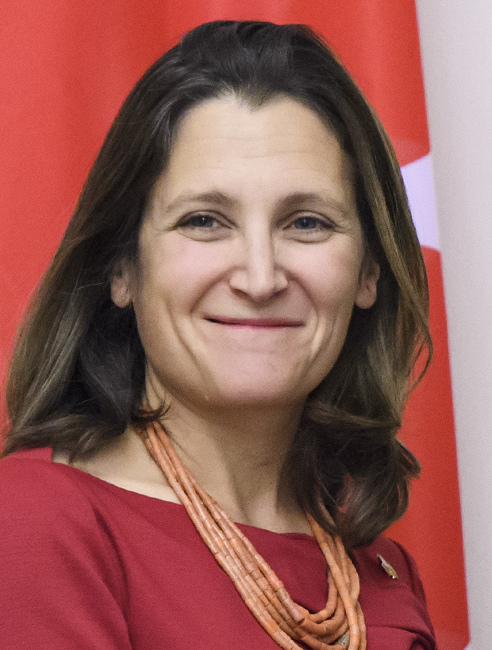
This is the only real question to answer since the crisis caused by the resignation of Finance Minister Chrystia Freeland broke out.
The current Liberal government has lost credibility and legitimacy since its leader Justin Trudeau announced that it would use public funds to finance election gifts and convince voters to come back to the Liberal boat.
The only certainty about the date of the next election is that it will be in 2025.
But when? And why?
The first plausible scenario would be to call an election tomorrow, December 20, with a vote no earlier than January 27 and no later than February 3. Justin Trudeau would still be the leader of the Liberal Party since it would be illogical and suicidal to go to an election with an interim leader. This scenario would have the advantage of putting an end to the current crisis and moving on.
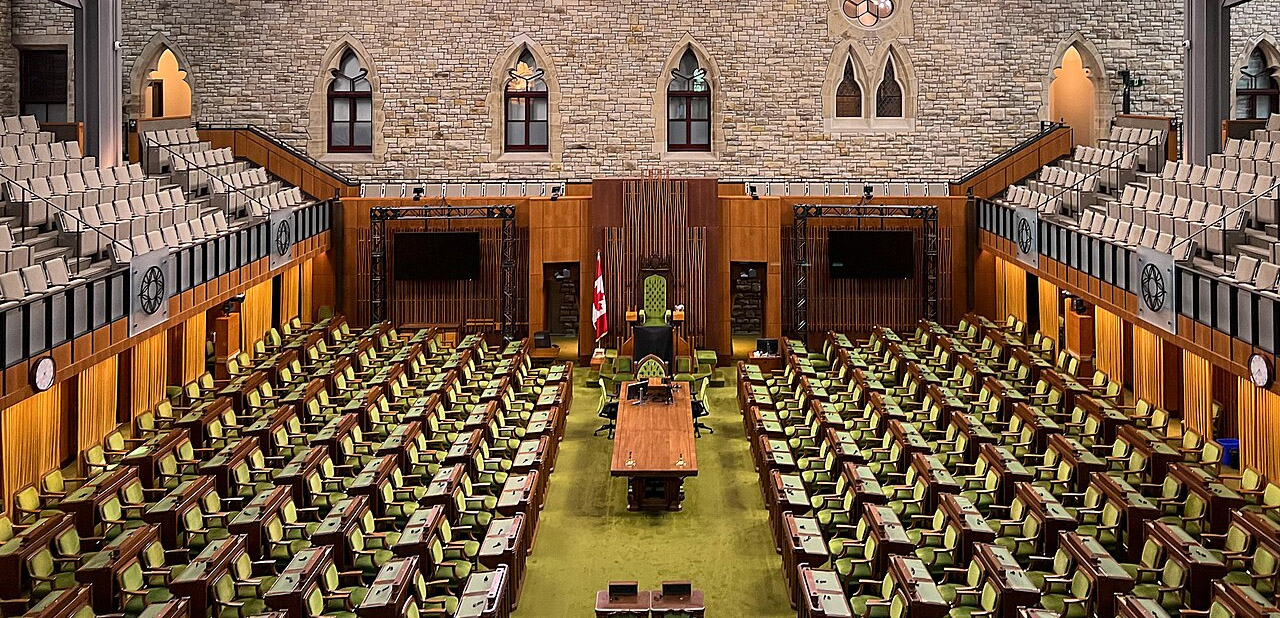
The second scenario is the most likely. The House of Commons has been closed since December 17 and is not scheduled to resume until January 27. Justin Trudeau therefore has nearly six weeks to get his campaign team in shape. He could then announce his government's resignation, the day before the House of Commons returns, and ask the Governor General to call an election on January 26. Just like in the previous scenario, and for the same reasons, Justin Trudeau would still lead the Liberals.
The third scenario is linked to the tabling of the next budget, around mid-March. The government would then fall since NDP leader Jagmeet Singh recently said that the Liberal government no longer had his confidence. Fall...? Maybe not so sure. Mr. Singh has been contradicting himself since he pretended to tear up the agreement that bound his party to the Liberals.
The fourth scenario, which is the most uncertain, would be the most audacious.
Justin Trudeau announces tomorrow, or as soon as possible, that he is asking his party to launch a “quick” leadership race and that he will remain at the head of his party and his government in the meantime. As part of this scenario, he will also have to announce a prorogation of the work of the House in order to avoid his government falling during a motion of censure or a vote of non-confidence on the next budget. The new leader should be elected no later than the end of August or beginning of September and the election would then take place on October 20.
There you have it!
In conclusion, we can add that Justin Trudeau has less than a year left at the head of the federal Liberals. And that the chances of the future new leader becoming Prime Minister, if he is in office for the October 20 election, are almost zero.
In the meantime, liberal strategists would do well to replenish their resources on electoral strategy, starting with reading an essay by the author Giuliano Da Empoli, Les ingénieurs du chaos, published in 2019 by Éditions JC Lattès.